
Introduction — Why Music Is Important for Elderly People
Music is not just a sound; it goes deep inside the heart and mind, especially in mature years. Older people often feel loneliness, reduced activity, and emotional ups and downs. In such moments, melodies become not just beautiful backgrounds but a source of joy, support, and inspiration. It is scientifically proved that the practice of music improves memory, attention, and emotional background. No surprise — it stirs up neural connections and turns on areas of the brain which are responsible for cognitive functions. For seniors, this is accessible learning powered by the Talented app, with age-friendly lessons and interactive feedback.
Why is learning the music so crucial?
- New skills development — even in mature age, learning helps to keep the brain toned.
- Social activity — groups and online communities stimulate regular practice.
- Emotional release — music relieves stress and helps in improving a person’s mood.
- Creative self-expression — it is satisfying to have the opportunity to create and share music.
Thus, music after 60 is the inseparable part of the active and healthy lifestyle, which inspires not to stop at achievements but offer new experiences. This aligns with user accessibility needs for elderly learners, supports practice confidence, and contributes to cognitive benefits.
Music Learning Technologies — New Opportunities for the Golden Age
Nowadays, technologies open doors in music that were not available earlier. Society stands on the threshold of the era when age will no longer be an obstacle to mastering a new instrument and style of music. Mobile applications and platforms with adaptive learning programs allow for convenient conditions to study among elderly students. Think of it as your personal learn to play music app with adaptive UI, simple navigation, and memory aids that support senior engagement.
Key benefits of modern technologies include:
- Personalization of lessons — programs accommodate user pace and ability.
- Accessibility anytime and anywhere — no need to schedule around a tutor.
- Interactive materials — video lessons, games, and feedback make the very process of learning much more lively and interesting.
- Community support — forums and chats allow communicating, exchanging experience, and getting motivation.
Comparative table of the traditional and technological approaches:
| Characteristic | Traditional Learning | Learning Through Technologies |
| Schedule Flexibility | Constrained by lesson times | Available 24/7, flexible |
| Cost | Often high | Often more affordable |
| Individual Approach | Depends on instructor | Adaptation algorithms and settings |
| Engagement and Motivation | Depends on teacher’s personality | Interactive methods maintain attention |
| Distance Learning | Rare | Built-in by default |
Taking into account the particularities of mature users’ features, technologies consider the size of the interface, the pace of delivery, and difficulty level. Because of this, learning stops being an obligation and turns into an interesting and inspiring activity that brings joy and new discoveries. For many elderly people, applications are not some kind of platform but a real musical companion in a path to new creative heights. This model emphasizes interactive feedback and accessible learning without sacrificing feedback clarity or skill enrichment.
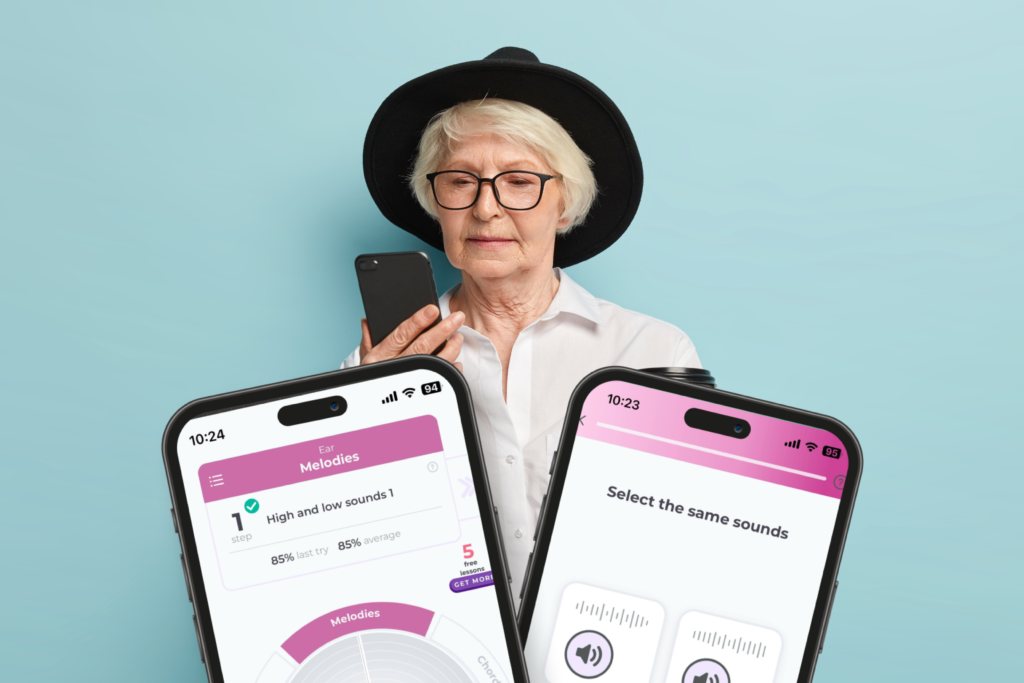
Features of Programs Such as Talented Include Adaptation to the Adult Learner
When teaching music to older adults, a special approach is necessary, and modern programs like Talented take that fully into consideration.
First and foremost, they personalize the process at an individual student level: this, for them, can include the skill level, physical ability, and even preference of each and every adult student.
The key features of Talented oriented towards older learners are:
- Flexibility in pace and schedule — the platform allows users to choose convenient lesson times, and one will proceed to the next lesson only after having mastered the present material. Thus, there is no stress or rushing.
- Intuitive interface — the majority of elderly users are not quite sure about new technologies, and Talented’s design was focused on the simplicity and accessibility of each section. This intuitive design supports age-specific exercises and music therapy goals.
- Variability of presentation — video classes, audio tracks, interactive exercises, and textual hints — all these contribute to better absorption of information regardless of the memory or attention capacity at mature age.
- Feedback and support — periodic checks on the progress of the trainees are given within the program so they can ask their mentor questions, providing personal communication and motivation.
- Accounting for physical features — doctors and ergonomists advise using programs that won’t create too much load on joints and eyes. Talented supplies adaptive exercises and the ability to customize visual layouts to minimize fatigue.
Consequently, thanks to the comprehensive approach, with such programs as Talented, music learning for elderly students is made available and appealing, furthering their inner growth and maintaining life tone. This reflects accessible learning with interactive feedback and a strong senior community.
Multiplicity is naturally associated with several common relationships, including one-to-many, one-to-one, many-to-many.
Online Music Learning for Seniors Is Accessible and Comfortable
The online format really becomes a revelation to many of the older adults wanting to master music.
The major advantages of this learning methodology are as follows:
- Accessibility anywhere — there is no need to travel, which means strength and time are not spent on the road. Only a computer or tablet with internet access is needed. Especially great this is for those with limited mobility.
- Freedom of choice and control — when and how much to practice is determined independently by the learner, with the ability to revisit difficult points without extra explanations. Better material absorption this control facilitates.
- Psychological comfort — most often, embarrassment in front of the living teacher or fear of making a mistake bothers many. Online lessons allow studying in a familiar home environment without hustle and judgment.
- Budget savings — online learning is often significantly cheaper than courses taught in person, while quality and feedback from programs remain high.
- Adaptation to needs — by means of technology, the program can adjust to the learner’s absorption speed and physical abilities, reducing risks of overfatigue.
- Social opportunities — it gives an opportunity to find support, share achievements, and become acquainted with new people through online communities or interest groups provided on websites.
Combined, these merits provide comfortable and effective musical education for older people in particular. Technology erases barriers and allows creativity to bring joy and new opportunities. This promotes therapeutic music practices and strengthens senior community ties alongside interactive feedback.
Benefits of Music on Cognitive and Emotional Health in Old Age
While some natural processes in the brain change with age, influencing memory, attention, and the general state of cognitive activity, there is one unique tool that can slow these processes and improve the quality of life for elderly people: music. The main advantages of musical education and active musical participation for health in mature years will be considered.
Cognitive benefits include the following.
- Memory improvement — new melodies and rhythms, being learned, provide training for working memory and contribute to better information retention.
- Development of attention and concentration — musical activities require keeping one’s attention focused on the details, which helps maintain attention and reduces distractibility.
- Stimulation of neuroplasticity — active engagement in musical activity encourages new neural connections and supports brain flexibility.
- Development of executive functions — development of logic and problem-solving skills through planning performance, coordinating movements, and complex sound patterns processing.
Emotional and psychological impact
Due to the production of endorphins through music, which are natural “happiness hormones,” the levels of stress and anxiety can be much reduced. Regular musical activities improve mood and reduce the symptoms of depression, especially among those who are socially isolated. Executing favorite pieces raises satisfaction and self-esteem, thus enhancing one’s belief in their own abilities. Other social benefits include communication with teachers and other students in online platforms, which creates a supportive community relevant to dealing with loneliness. Joint concerts and the exchange of experiences, among others, inspire continuous learning and development. Music is not just a hobby; it is a very serious tool that enhances cognitive health and emotional wellness among older adults. Along with the benefits of modern technologies, education is not only more available but also an effective way to be active at any age. Music therapy practices, feedback clarity, and user accessibility collectively improve practice confidence.
Stories of Success — Inspiring Examples of Elderly Learners
It is evident how music transforms the lives of elderly users, and many stories are particularly memorable. They not only acquired new musical skills but also confidence, the joy of living, and fullness of life.
1. Olga, 68 years old — the violin as a new passion
Before the app, Olga had been dreaming for years of starting violin lessons, but it was always the lack of time or inconvenient group classes that stopped her from doing so. Now, at home, she practices, adjusting lessons to her own rhythm, and already within six months was able to play her favorite melody at a family celebration. “That I am rediscovering myself, I feel,” she says.
2. Victor, 74 years old — back to the piano
Victor studied piano when young but gave up later on. Through the application, returning to music at home without pressure he managed. His progress has inspired the whole family, and a sense of achievement helps to keep his spirit’s vitality.
3. Marina, 71 years old — connecting generations through music
Marina took up the lessons in guitar with the hope of sharing her great love of music with her grandkids, and the joint lessons soon became the ritual of their meetings, full of laughter and creativity. The opportunity to create new memories together with her family means just as much to her as mastering the instrument.
These examples show that music learning at a mature age is far from being just a hobby but a strong mechanism of personal growth and socialization. Users note: individual approach to allow stress-free learning; the opportunity to practice at a convenient time and place; support from the community of like-minded people within the app. Not only digital progress metrics but real-life changes in each learner — seeing is important for developers. Their successes inspire further improvement of the tool, making learning even more accessible and joyful for all age groups. Because music is a language that knows no age boundaries! This is where accessible learning meets senior engagement and skill enrichment.
Getting Started — Tips for Those Wishing to Try Learning Via Technology
The first step in adult musical education will be bold and significant. Some recommendations that will help to make it as comfortable and effective as possible are presented below.
- Your goals, define — just learning to play a favorite tune or mastering musical literacy — clear understanding will help you to choose the right program.
- Choose the right platform — Talented, among other services, is oriented for adult learners and thus offers lessons tailored to the learning pace and perception characteristics.
- Time for practice, plan — comfortable intervals for yourself — 20–30 minutes several times a week — are optimal for effectively absorbing the material.
- Create a comfortable space — silence, good placement of instruments, and no distractions ensure a decent environment.
- Features of online courses, use — record yourself playing, ask for instructor feedback, take repeat lessons.
- Be open to mistakes — it is in trying, erring, and learning from slip-ups that education takes place.
Confidence for a musical journey with inevitable pleasure is warranted by just following these steps. Incorporating interactive feedback and age-friendly lessons supports elderly learners with simple navigation, memory aids, and age-specific exercises.
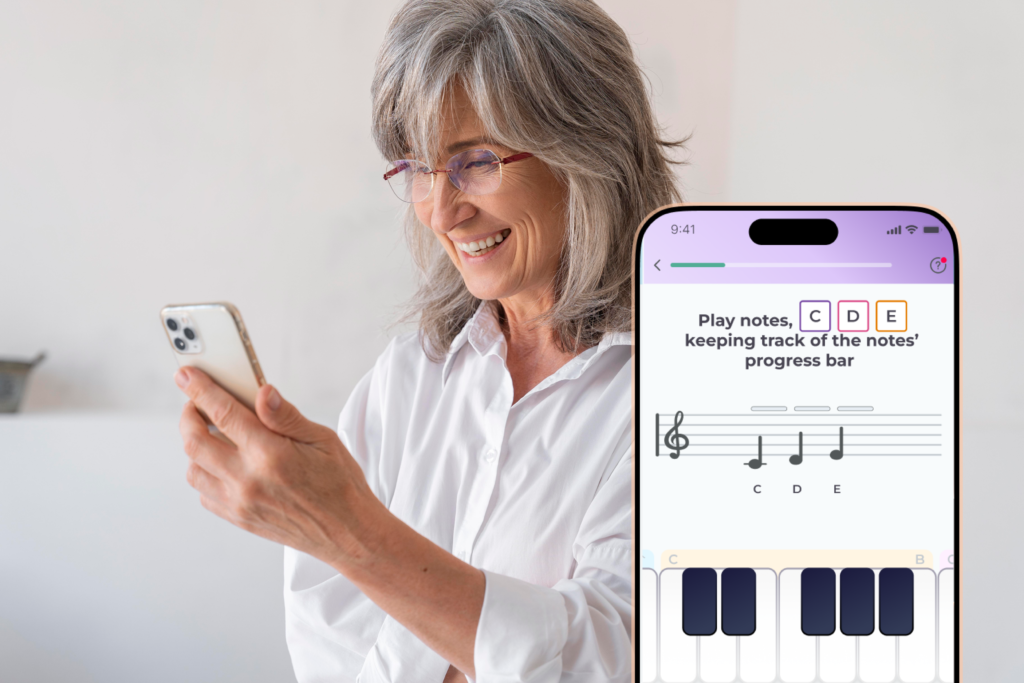
Conclusion — Music and Technology as a Path to Joy and Development in Adulthood
Not only is it a way of self-expression for them, but it also effectively preserves cognitive skills, emotional stability, and social involvement. Nowadays, with the development of modern technologies, such as the Talented platform, musical education has become closer and more accessible, thus erasing age barriers.
Key advantages of this approach include:
- Individualization — programs tailored to individual abilities and learning pace.
- Convenience — lessons at home, under comfortable conditions, at a time that suits one’s schedule.
- Motivation — an interesting, interactive format that keeps one’s attention and encourages further continuation.
- Support — access to the instructors’ expertise and a community of like-minded peers.
Not only new hobbies, but sources of joy, creative fulfillment, and improved quality of life are discovered by older adults mastering music through the use of modern technologies. In this junction of sound and digital solutions truly lies the potential for enrichment of the golden years — bright, meaningful, and developmental. The approach blends accessible learning, interactive feedback, and user accessibility to serve a senior community focused on music therapy, feedback clarity, and lasting skill enrichment.